
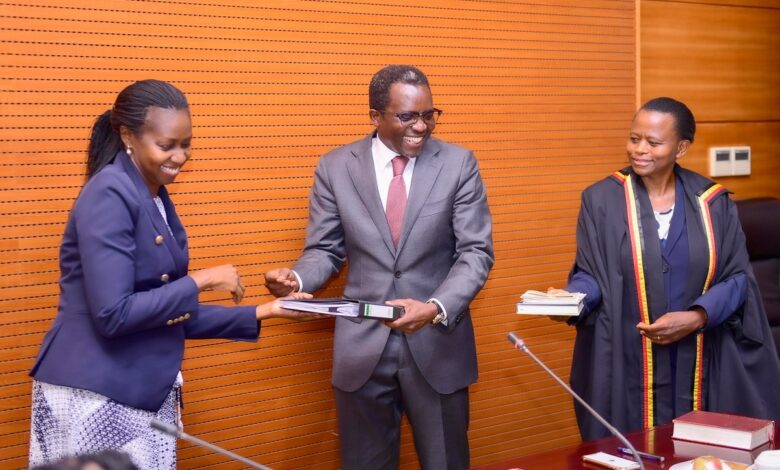
Miss Gloria Omaswa, Principal Private Secretary to President Yoweri Museveni, has been singled out in a sharp letter from an NRM grassroots leader who accuses her of blocking his efforts to secure an urgent meeting with the head of state.
The letter, dated September 10 and marked “very confidential,” comes from Hon. Nsubuga Jack, who identifies himself as Vice Chairman of the NRM Mainstream in Mengo Town Village Cell and Chairperson of the NRM Mobile Volunteer Taskforce.
Nsubuga claims he has repeatedly written to the Electoral Commission and to Omaswa without success, seeking to brief the president on what he describes as a “standstill” over his proposals for President Museveni’s 2026 re-election drive.
In the appeal, Nsubuga says First Lady Janet Museveni had earlier recommended Omaswa to “notify the president of my plight and get me an express appointment,” but alleges that Omaswa has “slept on the job” or is demanding a financial inducement.
He further warns that the president risks “not walking with clean hands” if the matter is not addressed before the September 23 presidential flag bearer nominations.
Nsubuga’s letter mixes constitutional references with internal party mobilisation plans, including a push for four million endorsement signatures for Museveni’s sole candidature.
He repeatedly accuses unnamed “mafias” of blocking his access to the president and urges both Omaswa and Electoral Commission chair Justice Simon Byabakama to “rescue me to meet the person of the president.”
While the letter also praises Gen. Muhoozi Kainerugaba’s early endorsement of Museveni, it frames Omaswa as pivotal to resolving the dispute, claiming she alone can ensure the president is informed.